
- Empty cart.
- Continue Shopping

To assess authentic Moroccan leather goods, check three things separately: what the material is, how the item was made and where it was produced. A real leather bag is not automatically handmade in Morocco, and a Moroccan-style design does not establish its origin.
The most useful starting point is a clear material description supported by specific answers from the seller. Surface appearance, smell and price can offer clues, but none should be treated as a certificate of authenticity.
Start with the material description
Leather terminology can be confusing. Leather Naturally’s terminology guide distinguishes real leather from bonded material and explains that finishes can change its appearance. Here are a few terms worth understanding:
- Full-grain leather: leather from the upper layer of the hide or skin.
- Split leather: material from the layer beneath the grain layer.
- Bonded leather: a composite using leather particles and a binding substance.
- PU or PVC imitation: an alternative material that should be described clearly.
“Genuine leather” identifies a material claim; it does not tell you everything about construction, finish or durability. Ask whether the body, straps, trim and lining use the same materials. A bag may combine leather with fabric or other components.
Inspect details, not just the main photograph
When shopping online, request close-up images of the surface, seams, strap attachments, opening and interior. These views help you judge both the material description and the usefulness of the finished product.
Look for loose stitching, weak attachments, damaged edges or closures that do not work properly. Handmade work can show small variations, but poor construction is not proof of authenticity. If the seller uses a sample photograph, ask how the delivered item may differ.
Why appearance and smell are only clues
Some leather retains visible grain variation; other leather is coated or embossed. Leather Naturally notes that pigmented finishes can hide natural grain. A very uniform surface therefore needs questions, rather than an automatic “fake” verdict.
Smell cannot verify Moroccan origin or handmade production. It is also unavailable when you shop online. Prioritise the written composition and the seller’s explanation over a single sensory test.
Check the Moroccan origin and the maker
Ask for the workshop or artisan’s name and where the item was assembled. If a listing says “Moroccan-inspired,” clarify whether that describes the design or the place of production.
Useful questions include:
- Where was this item made?
- Which parts are handmade, and by whom?
- What material is used for the exterior and straps?
- Can you show the actual item or explain variation between pieces?
- What care and return information applies?
Clear, consistent answers are more useful than repeated claims that a product is “100% authentic.” Keep those answers with the order confirmation.
Avoid destructive authenticity tests
Do not burn, scratch, soak or apply chemicals to a bag to test it. You could damage the finish and affect your ability to return it. Ask for clarification or an independent assessment if the product does not match its description.
A low price alone does not prove that an item is fake, and a high price does not establish quality. Compare items with similar dimensions, construction and materials before judging value.
Buying Moroccan leather goods on Arabastta
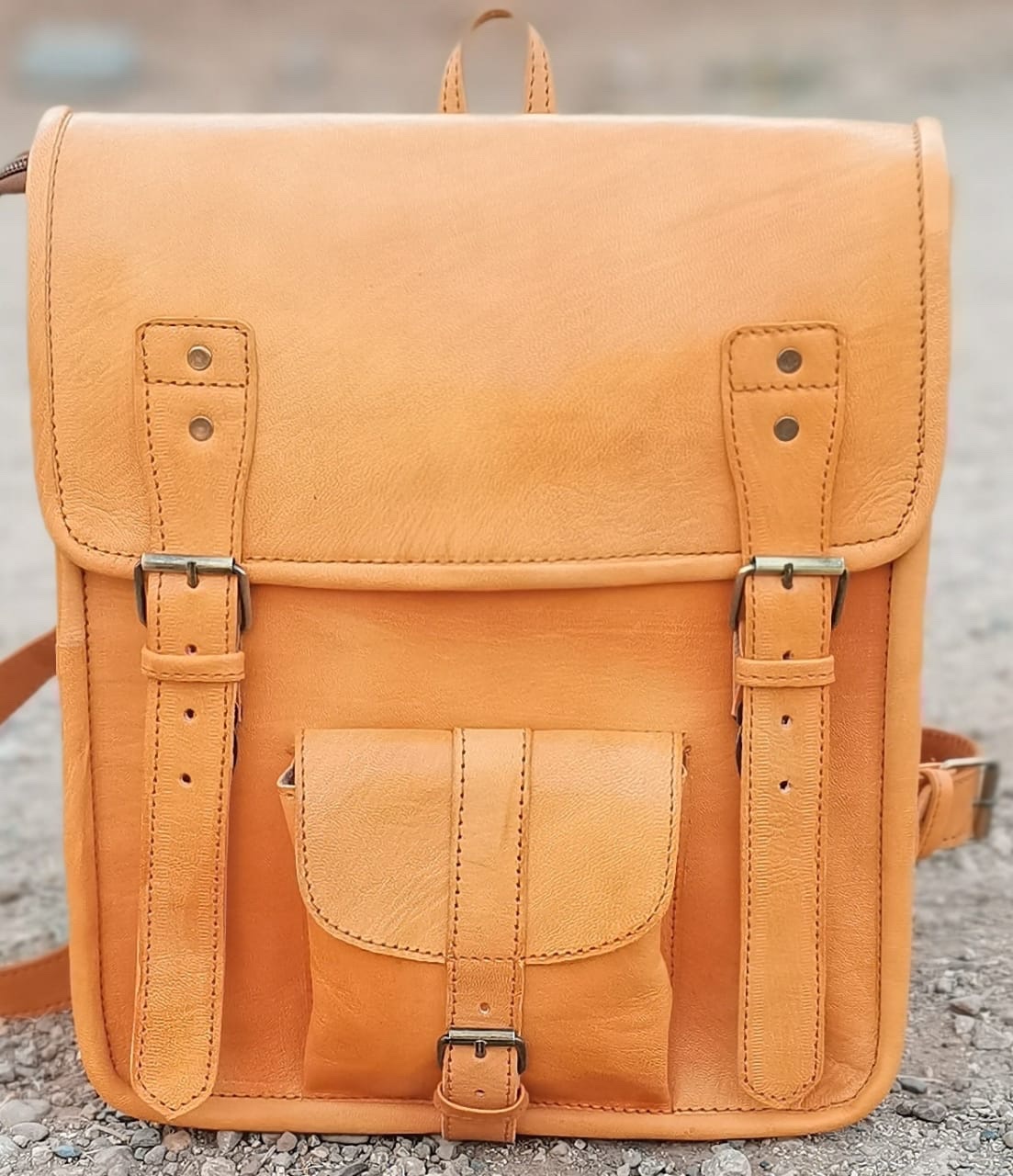
Browse the Moroccan leather collection and read each seller’s product details. For example, the handmade leather backpack listing provides a starting point for comparing a practical bag.
If a material or origin detail is missing, ask before ordering. Arabastta’s role is to connect customers with Moroccan artisans and sellers; this guide does not claim that every listing has undergone laboratory material testing.
Frequently asked questions
Is a synthetic bag always a fake?
No. An alternative material described honestly is a legitimate product choice. The problem is a mismatch between what is claimed and what is supplied.
Does “handmade” mean “real leather”?
No. Production method and material are separate questions. Ask about both.
What should I do if an item differs from its description?
Keep the packaging, take clear photographs and contact the seller or Arabastta promptly. Check the applicable return information before purchase.
Choose with confidence: compare materials, maker information and construction together, then request any missing details before paying.
Sources: Leather Naturally: leather terminology and Leather UK: how to buy leather well.